Showing posts with label history of divination. Show all posts

Monday, 28 November 2011

History of Divination - Pyromancy


Ready for a little divination? Here at Magick Users University, we want to be able to instill a little learning one article at a time. History of Divination is a great class, and maybe with it you will find the divination technique for you! Good to see you've joined us! So what's on the agenda for today? Lets find out!


Pyromancy
“Honey, I predict the flames in the kitchen say... we're not going to have a kitchen in ten minutes.”


+ A Little History
So what is pyromancy? Pyromancy is as it sounds: it is the art of divination using fire and flames. Technically, the diviner uses signs they see within the flames in order to predict the future or outcome of events, or see back into past events for answers or revelations.

There are some publications that denote that this mystic art originally used a sacred flame. What could possibly make the flame sacred? The flames used while burning human and animal sacrifices were a good start. However, fire is known for ritual cleansing and purification. Perhaps the mere power of fire made it a candidate for use in divination. A second alternative was to use the flames that were ignited in torches.

+ Pyromancy Today
With the usage of flame, and the ability to make fire with literally anything, pyromancy can be easy to do, albeit dangerous. Pyromancy in bonfires during a Sabbat is probably the most common, as it is a large enough flame to divine and see signs within. Also, if you have a fireplace, during the winter it could be something fun to do while huddling around to fight off the cold.

+ How to Pyromance
So how does one read the flames? It is up to the diviners discretion as to what the signs tell them, however, here are a few things to take into account.

The color of the flame. Colors already have presence in magick, with red for power, and blue for calming... such colors are also within fire, so keeping in mind the colors you primarily see is important.

How high the flames are. Sometimes you can get an intense spiking flame, other times is low to the ground.

The way it burns, of course. Is it slow burning? Is it eating away quickly at the articles used to keep it aflame? Its it tilting? Did it suddenly go out? While the latter was considered a bad omen, all of them are taken into account. When you do your own divination, write down what you feel the flames mean to you! It can help you complie your own resource as to what you see within the flames, and soon, you'll be telling your relatives what you see at the Yule Log burning.

+ Magick Users University Approved Resources
The Occult Sciences (1855), by Edward Smedley
The Complete Manuel of Occult Divination: Volume One (1912), by A.E. Waite


We here at Magick User's University hope this lesson has broadened your horizons! Make sure to follow us on Twitter or check us out on Tumblr!

Saturday, 9 July 2011

History of Divination - Palmistry


Welcome to the newest course here at Magick Users University, History of Divination! So what is divination?  

Divination is the attempt to shed light on future events by the use of occult or supernatural means, such as psychic powers. There are a lot of ways to foretell the future, and thus, there are many, many forms of divination, some you probably never even knew about. That's what this course is for! And perhaps for some, you can find something that interests you.

Lets begin with something simple for the first History of Divination class!

Palmistry

Put your hands (palm) up!


+ A Little History
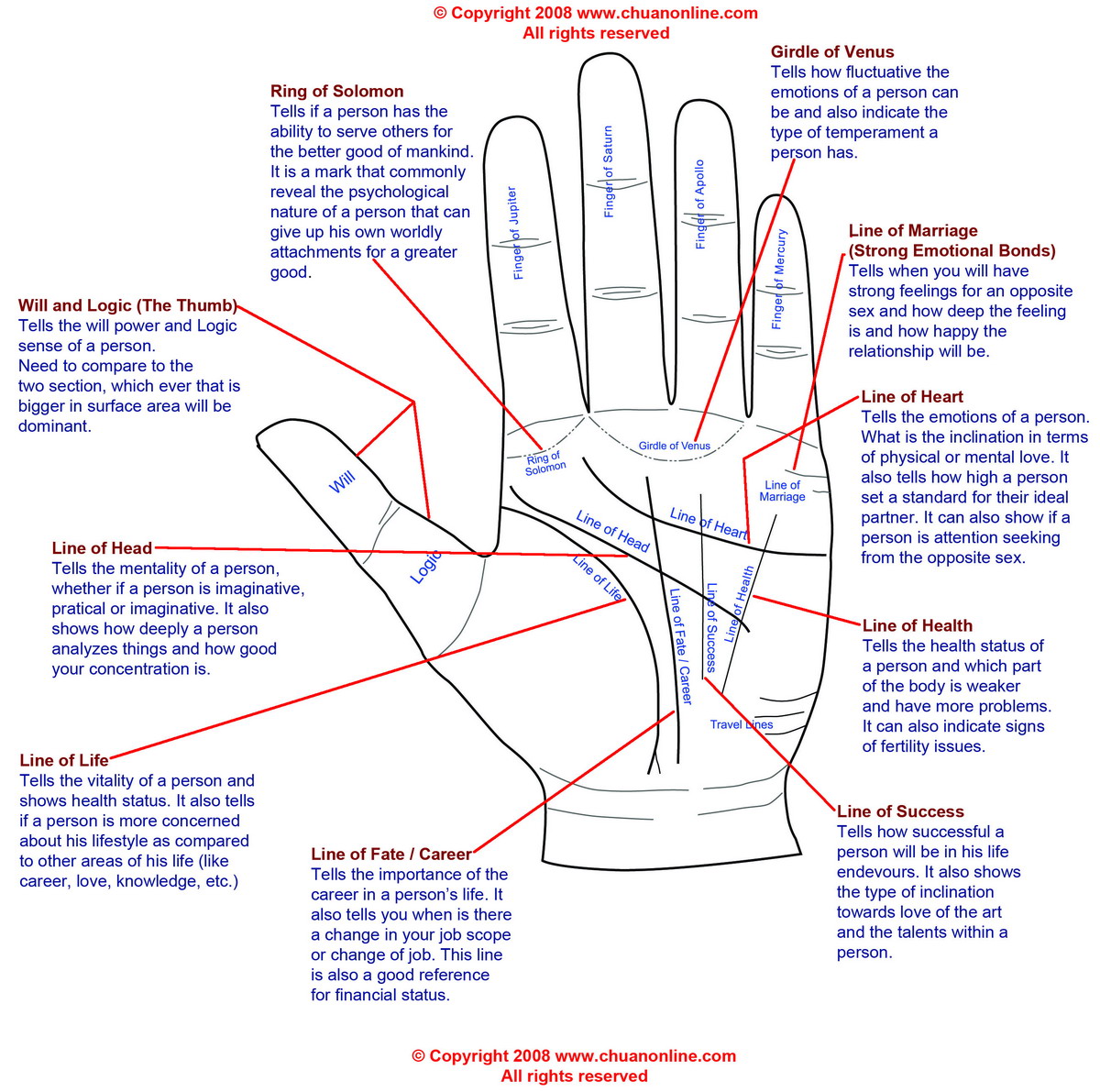
Palmistry, also known to some as chiromancy, is the art of telling the future by using the hand as the focal medium. Contrary to popular belief, the divination process focuses on more than just the palm; it extends to the fingers as well, encompassing different ranges of specifications. The shape of the hand, the types of fingerprints on each finger, and even how your fingers are positioned all tell the story of the owner's life.

The practice can actually be rooted back to ancient Greece by two very familiar names: Aristotle and Alexander the Great. The former was the one who brought the study of the hands to light, and Alexander the Great found great pleasure in analyzing his own hand. It eventually extended to doing so with his officers, attempting to figure out what kind of character they had. It was he who popularized it, even to the point that many were using it for clerical and medicinal purposes.

From Greece it spread around the word, mainly to India, Egypt, and China, but there were also European countries that jumped on the bandwagon.

Other sources say it may have originated in the other countries first (such as India or China), however the popular opinion is Greece. Try looking it up yourself, if you're interested!


+ Palmistry Today
Palmistry is still a popular divination technique; in fact, there's a woman in town that I love to get readings from. There are some that stick tried and true to the clerical arts when it comes to palmistry; some practitioners use it for holistic healing or psychology.

Palmistry has somewhat taken a backseat to other forms of divination, such as tarot/oracle cards, but its very interesting because everyone hands are different, all the way up to the fingertips.


+ How to do Palmistry
This is a very quick guide for those who want to jump on in and see how it is for yourself. References are in the next section!

Start with a hand, of course. Which one should you choose is the common question, but either or is fine. Most people ask you to hold out your dominate hand. I usually hold my right hand out as its the one I write with (however, I'm selectively ambidextrous, as I prefer to drive, hold, and do most other activities with my left).

On the palm are three lines which hold perhaps the most fame in palm reading:

The top horizontal line is the Heart Line. This line indicates what you think it does: relationships and affections of the individual being read. This line is important for those whom are doing a palm reading for indications of love. Breaks or Xs across the line can indicate heartbreak. If the line shoots up high, the more passionate the individual could be.

The middle horizontal line is called the Head Line. It relates to how a person thinks. The wider the space is between the Heart and Head Line indicates a person whom takes risks. Those too close together or even connected can unveil cowardice.

The bottom line that usually curves as if to engulf the thumb is called the Life Line. They say the longer the line, the longer the Life Span of an individual. It is also an indicator of generosity, depending on how close to the thumb the line is (the closer, the more miserly).

The shape and size of the hands also indicate different factors of a person's personality and things that have happened during their life. Check out all the lines on your own hand! All of them have meaning. Compare them to the hands of your friends and family.


+ Magick User's University Approved Resources
Palmistry: How to Chart the Lines of Your Life; Roz Levine
Palm Reading: A Little Guide to Life's Secrets; Dennis Fairchild
Handy Palm Reading Diagram [ EDIT: Me: *three hours later* HAHAHA! HANDY! Wow, how did I miss that awesome pun I made?!]


We here at Magick User's University hope this lesson has broadened your horizons! Make sure to follow us on Facebook or check out our zany antics on Tumblr!